

1st ISSN, 9 December 2024
Apintlaw in the SNCG (Sea Nomads Contact Group) has been working on the subject of sea nomads of Southeast Asia (SEA). The SNCG was co-host and co-convenor of the first ever 1st International Symposium on Sea Nomads (ISSN) in Southeast Asia (1st ISSN). The SNCG was founded in 2022 by Henry Thomas Simarmata (Apintlaw), Dr. Dedi Supriadi Adhuri (BRIN/Indonesian National Research and Innovation Agency), Dr. Wengki Ariando (Social Research Institute of Chulalongkorn University, now with KITLV/The Royal Netherlands Institute of Southeast Asian and Caribbean Studies). The work has been a collaborative initiative and network with SEA sea nomads communities and with research communities, jurists, and government entities. Main goal of the SNCG is to enable a mutual recognition towards sea nomads with their nomadic/semi-nomadic life. The SNCG cannot and will never replace the self-identification and the role sea nomads in deciding what is best for themselves, yet to be with them and availing support necessary for them to engage different actors, policy making, international fora. The SNCG work covers fields of nomadic life of sea nomads, nomadic tenure, traditional knowledge, rights and culture of sea nomads. At Present, SNCG is in collaboration with Social Research Institute (as SEA co-host) and with sea nomads organisations including Sama Bajau organisations in Indonesia, Orang Laut organisations and SEA sea nomads communities.
TEMU RAYA SAMA-BAJAU 2024
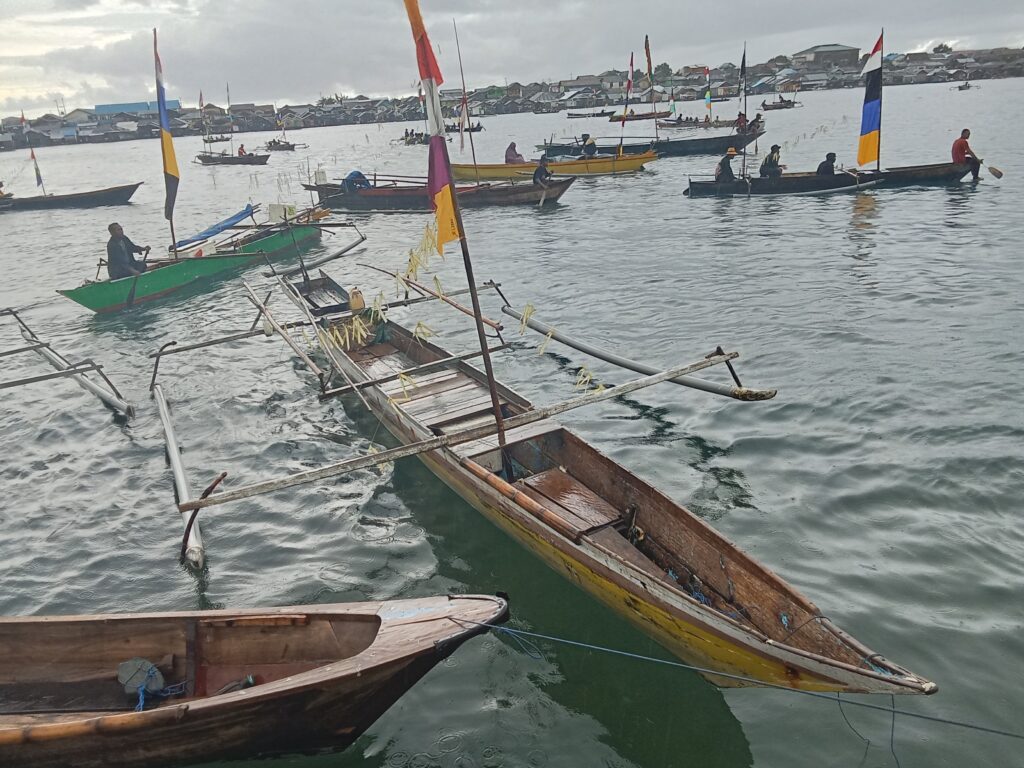
Jayabakti Sama-Bajau Village, Banggai Tomini Gulf, Central Sulawesi/ This is a village as extended estuary. There is a long history of nomadic maritime life of Sama=Bajau connected to this island. Over time, the Sama-Bajau of Jayabakti grows their livelihood and traditional knowledge, while maintaining their cultural and relatives connection to seas and islands in the Southeast Asia maritime ecosystem where sea nomads lives and wanders. Gathering of the Temu Raya Sama-Bajau 2024 paid a visit to this village. (Apintlaw and Sea Nomads Contact Group/SNCG (DR. Dedi Supriadi Adhuri, DR. Wengki Ariando, Henry Thomas Simarmata) worked in the process and the dialogue of the gathering.
Women leaders of Sama-Bajau communities of Jayabakti
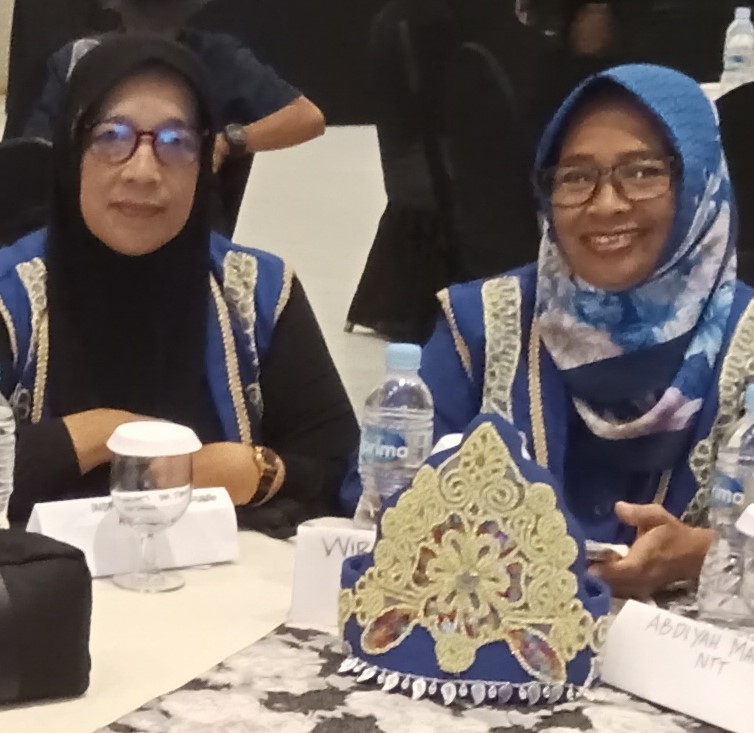
Temu Raya Sama-Bajau 2024 was an important gathering where Sama-Bajau communities, sea nomads of Southeast Asia, academia, researchers, the Ministry of Culture of the Republic of Indonesia, functionaries (of local government), civil society organisations gathered celebrating rich culture of Sama-Bajau, and of sea nomads of Southeast Asia as a whole, and making way for the recognition of the nomadic heritage and life of sea nomads. This gathering also was an effort in pursuing the recognition of shared intangible cultural heritage (ICH) with sea nomads of Southeast Asia, government of countries of Southeast Asia where they hosted sea nomads, academia-researchers, and civil society organisations.
Declaration of the “Temu Raya Sama-Bajau”, Banggai, Sulawesi 13-15 December 2024 (english translation)
Original: Bahasa Indonesia
Declaration of “Temu Raya” Congress Sama-Bajau 2024
On December 13,14, 15 2024, the Sama-Bajau community, part of Indonesian Sea Nomads, gathered andheld a silaturahmi in Luwuk, Banggai Regency, Central Sulawesi Province, Indonesiaand mobilised an effort for a recognition of the Sama-Bajau Community as the mover of the Nusantara Maritime Culture within the Shared Home of the Republic of Indonesia. The Sama Bajau Community gathered were delegates from theprovinces of Central Sulawesi, Southeast Sulawesi, North Sulawesi, South Sulawesi, Gorontalo, North Kalimantan, East Kalimantan, South Kalimantan, West Nusa Tenggara, East Nusa Tenggara, Maluku, North Maluku, East Java, Central Java. The Gathering was held as part of the Lipu Celebes 2024.
Delegations of The Sama-Bajau Community came to the shared determination that the Sama-Bajau Community has and will continue to contribute to the enrichment of national culture, especially maritime culture. The maritime culture of the Nusantara includes traditional knowledge on ecosystem and on coastal/marine resources, conservation, traditional wisdom, “adat istiadat” (tradition), mantras, knowledge of astronomy, navigation, shipping, fishing, and others important forms. All of those foster a connection for points of Nusantara seas, ensures food security through fisheries and marine-culture, develop just and sustainablecoastal/marine andfisheries governance, and strengthen Indonesia’s maritime identity. The ever sustaining presence of the Sama-Bajau network and diaspora in Nusantara highlights the ties between ethnicities, groups and localities in thearchipelago fostered by the Sama Bajau.
All delegations of the Sama-Bajau Community expressed their highest respect and appreciation to the government of the Republic of Indonesia, especially the Ministry of Culture of the Republic of Indonesia, which is the partner and enabler of the 2024 “TemuRaya” (the Great Solemn Gathering) of the Sama-Bajau. Delegations of the Sama-Bajau Community called themselves to support the effort of the government of the Republicof Indonesia for the recognition of the Intangible Culture Heritage, especiallyof the Indonesian Maritime Culture. The Indonesian Sama-Bajau communities, together with neighbouring Sama Bajau Communities of Malaysia, Singapore, Thailand andthe Philippines would pursue this world heritage recognition as a shared effort.
Delegations of The Sama-Bajau Community expressed its highest gratitude and appreciation to Indonesianand international entities who supported the discussion and exchange ofexperiences, especially the Government of Banggai Regency of the Province of CentralSulawesi, the Sea Nomads Contact Group (SNCG), BRIN (the National Research andInnovation Agency) Republic of Indonesia, the Andaman Project- ChulalongkornUniversity, the Samdhana Institute.
Delegations of theSama-Bajau Community are being fully aware of the challenges, both those thathad a specific impact on the Sama-Bajau Community and those that had an impacton Indonesia. The challenges notably in coastal/marine management which oftenlead to conflict rather than collaboration, the threat of biodiversity, basicservices which yet communicated and handled by government of the central,provincial, district/city, sub-district, village and hamlet level, welfarewhich has not been fully achieved, movement of the the Indonesian Sama-Bajau Communitywhich is still unfairly considered a criminal problem, and the absence ofguarantees that the good things that the Sama-Bajau Communities strive forpersistently are recognised as the national contribution. Delegations of theSama-Bajau Community continues to look for better shared and prompt resolutionto these challenges.
Sea and islandsof the Nusantara are the grace from the God Almighty which must be managed wisely, passing it to the next generation. The generation of today and the nextgeneration of the Sama Bajau community have the same right to enjoy thisnatural grace of the God Almighty. Efforts must be made continuously andtirelessly to ensure that the sea and islands remain sustainable.
Delegations of theSama-Bajau Community Delegation welcomed with open arms all brothers andsisters from different background and walks of life who supported andcollaborated for the recognition of Sama Bajau community as the mover of the Nusantara Maritime Culture. We are all“Danakang” in “Pasidakauang”, we are brothers and sisters in the Sama-Bajautogetherness. This togetherness will enable the Sama-Bajau Community to beresponsive to face maritimechallenges of the Nusantara. Planning of follow-upwill be made immediately for the realisation of the Indonesian Maritime Culture into shared everyday life.
Luwuk-Banggai, 14 Desember 2024
Declaration of the “Temu Raya Sama-Bajau”, Banggai, Sulawesi 13-15 December 2024 (original text)

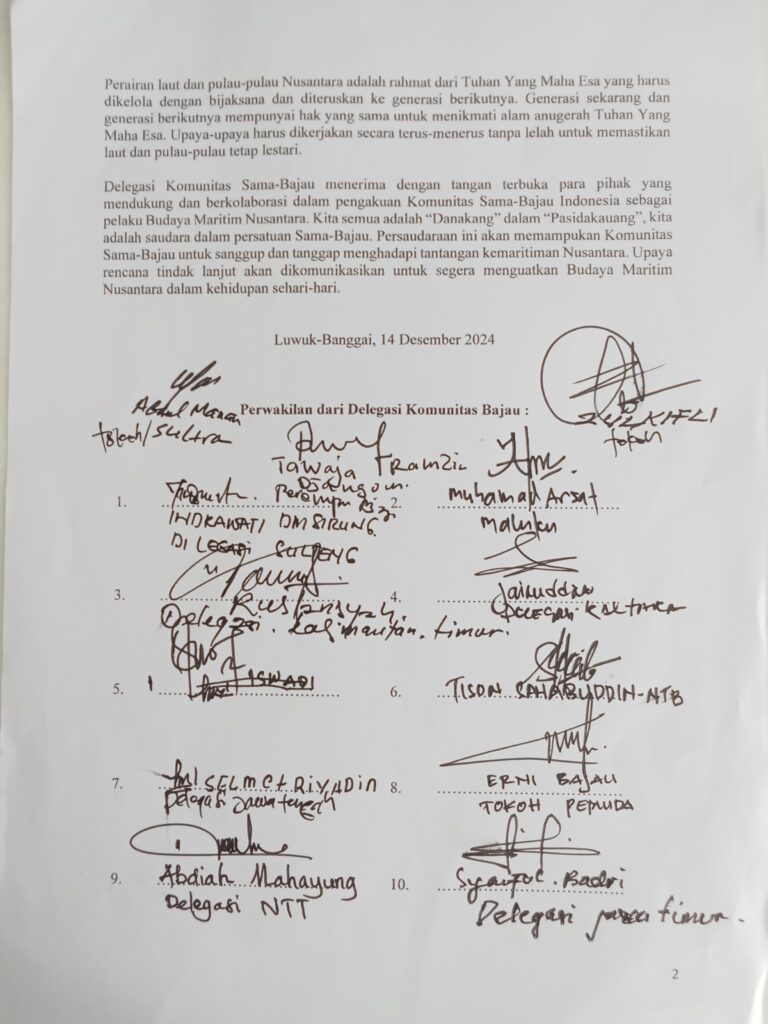
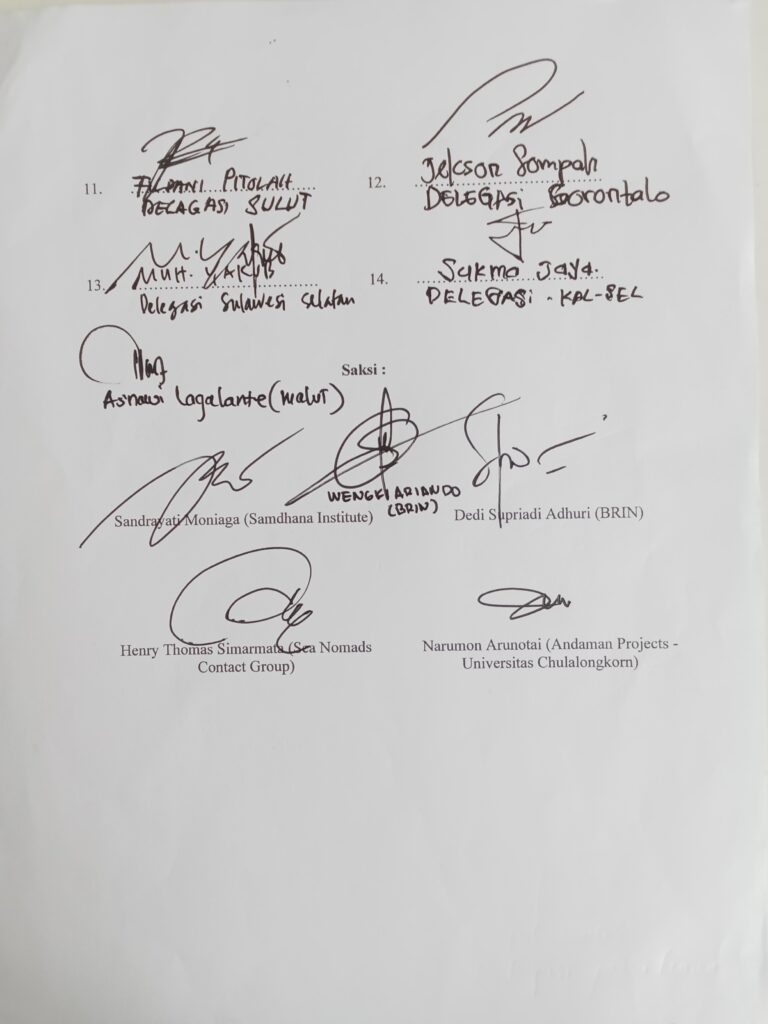
The work on sea nomads, and with sea nomads communities: a collaboration in Sea Nomads Contact Group

A. Initiative for recognition
The initiative of recognition is a work dedicated by a group of academia, researchers, and jurists for recognition of rights of Sea Nomads in different sea-ecosystems in the world into legal and policy framework, and into shared knowledge management. The group develop a series of researchs (big and small), collaborations, platform development, capacity buildings, government relations, and legal advocacy in the subject of sea nomads of Southeast Asia.
First and foremost, it is in the foundation of the initiative to be with sea noamds communities in Southeast Asia, and to be the collaborator of the communities in pursuing the recognition.
The recognition is developed with and through the mutual understanding of both government/legal regime with Sea Nomads communities, and vice versa; and various communities with sea nomads, and vice versa. The recognition is based on understanding towards the right to life of sea nomads community in different countries and administrative areas.
As a process in international level, the recognition is developed with and through international law and mechanism, and yet further interpreting and developing standard out of UNDRIP (United Nations Declaration on the Rights of Indigenous Peoples), UNDROP (United Nations Declaration on Rights of Peasants and Other People Working in Rural Areas), and other special procedure of the UN Human Rights Council for constitutive recognition. Further, the group seeks to collaborate with governements, both in national/central level and in decentralised and village level, to develop a framework of recognition in the respective level. The recognition also seeks a adoption of mechanism in different jurisdictions and institutions of law necessary to guarantee to right to life of sea nomads community.
As a process of knowledge management, the group develop communications and collaboration, as shared work with sea nomads, with various researchers, academia, and jurists. Researchs, shared storage of academic works, comparative studies, annotations are contributed to the work of knowledge management.
B. Sea nomads
The term sea nomads is used to refer to the sea nomads of Southeast Asia; Indigenous ethnic groups that are closely connected to their coastal environments and marine resources in the region that encompasses modern-day Malaysia, the Philippines and Indonesia. They called themselves: Bajau, Bajo, Sama Bajau, “suku laut”, Moken, “orang laut”, urak lawoi. (There are other pejorative or demeaning call towards them, such as “manusia perahu” (boat people) which we do not agree on them, and do not use it in our research.) Today’s sea nomads population is estimated to be around 1.1 million.[1] Although they are dispersed across the Southeast Asian region, sea nomads in this region share ‘similar social and cultural features, including shared shipbuilding and fishing culture, traditions, myths,’ and oral traditions.[2] Their livelihoods are primarily based on small-scale fishing activities, but can extend to coconut palm cultivation and marine trade of various natural resources including cucumbers and sea mammals.[3] The Suku Laut are highly adaptable peoples as their nomadic lifestyle has facilitated their past migrations to different areas ‘due to droughts, rising tides, floods, pestilence, and political strife,’[4] which also historically allowed them to establish trade relations with diverse communities from East Africa and Indo-Pacific region.[5]
Sea nomads’ traditional knowledge has allowed them to develop their distinct practices of ‘weather forecasting, traditional fishing method, traditional medicine, disaster preparedness, cultural astronomy, aquaculture, mangrove conservation and coral reef conservation’,[6] which are linked to their spiritual belief system. Environmental knowledge in the community is vast and they are known to have advanced understandings of ‘ocean currents and tides, winds, fishing grounds, the position of the sun, moon, and stars…freshwater sources…and numerous species of flora and fauna of sea and coast, including edible species and species for medical use.’[7] Sea nomads communities and their respective practices have existed for many hundreds of years, in part because of their ability to adapt to environmental changes and utilise their local knowledge.
Sea nomads is known by Indonesian and by scholars around the world as nomadic and semi-nomadic communities living in Southeast Asia waters. The sea nomads communities living in semi-nomadic way in a very expansive maritime ecosystem. Living their life, they develop their traditional knowledge, code of leadership, navigation analysis and skill, and a projection of worldview towards the archipelago. Their way of life is so different with a legal system developed by “normal” nation-state. They are in constant moving, though not in a short period time. This makes them regarded as cannot fit into a system of “indentification card” or “population management” (in Indonesian legal system: “adminduk”).
About the initiative
The work on international law and collaboration with researchers bring the attention towards sea nomads. The work has been in Apintlaw’s process since 2020. The work also with collaboration with Dr. Dedi Adhuri (of Indonesian Research and Innovation Agency) and with Dr. Wengki Ariando (of SRI/Social Research Institute, Chulalongkorn University) This is as Sea Nomads Contact Group (SNCG).
The work of Apintlaw is concentrated in developing framework for international law for recognition towards sea nomads. Apintlaw works on translating and intrapolating international law towards the recognition. The work is also alloted towards Indonesian constitutional law. This is bring certain ruling of the Indonesian Constitutional Court into a process for recognition towards the Indonesian sea nomads.
[1] Kazufumi Nagastu, ‘A Preliminary Spatial Data on the Distribution of the Sama-Bajau Population in Insular Southeast Asia’ (2010) 13 Hakusan jinruigaku 53, 53.
[2] Pradiptajati Kusuma et al, ‘The last sea nomads of the Indonesian archipelago: genomic origins and dispersal’ (2017) 25 European Journal of Human Genetics 1004, 1004.
[3] Nagatsu (n 19) 53.
[4] Wengki Ariando, and Sangchan Limjirakan, ‘Traditional Ecological Knowledge of Indonesian Sea Nomads “Orang Suku Laut” on Climate Change Adaptation’ (Conference Paper, Proceeding on the 5th EnvironmentAsia International Conference, 13-15 June 2019) 33.
[5] Kusuma et al (n 20) 1004.
[6] Ariando and Limjirakan (n 22) 31.
[7] Lioba Lenhart, ‘Orang Suku Laut’ (2004) Encyclopedia of Sex and Gender 750, 750.